
Holding the Loss of a Child: Miscarriage and Beyond
By Candor & Hope Therapy Inc.
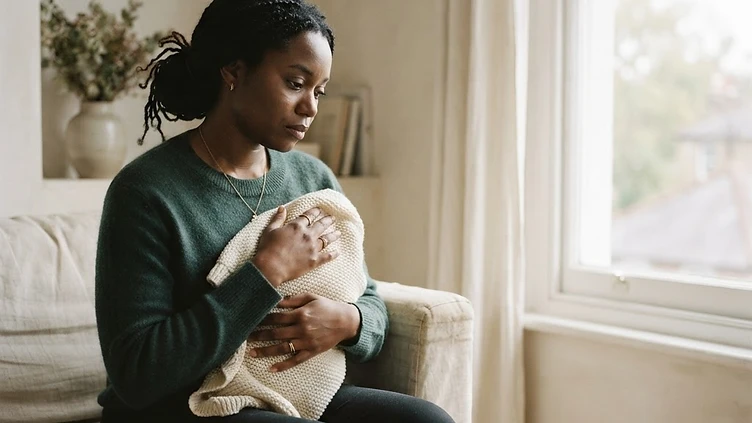
The loss of a child — through miscarriage, stillbirth, infancy, or later in life — is a grief that lives in the space where a future used to be. Here's how to hold this loss, find support, and carry the love forward.
There are few losses as isolating as the loss of a child — whether through miscarriage, stillbirth, infancy, or later in life. It is a grief that lives in the space where a future used to be, and because that future was largely invisible to others, the loss can feel invisible too. This article holds both experiences together, because they share a common shape: the mourning of a life that did not get to be fully lived, and a love that has nowhere ordinary to go.
## Miscarriage: the grief that others cannot see
Miscarriage is one of the most common losses and one of the least acknowledged. As many as one in four pregnancies ends in loss, yet the cultural script around it is thin. Well-meaning people say things like "you can try again," or "it wasn't meant to be," as though the loss were of an idea rather than a life. For the person who carried that pregnancy — and for their partner — the loss is real, embodied, and specific.
Miscarriage grief is often complicated by silence. Many people do not share the pregnancy early, so when the loss comes, there is no community to tell. The grief is carried privately, sometimes for years, alongside a feeling that it is not "supposed" to be this big. But it is allowed to be this big. A loss at any stage is a loss of a particular imagined child, a particular future, and a particular version of your family.
## The loss of a child
The death of a child — at any age — falls outside the natural order we expect grief to follow. We are prepared, however imperfectly, to lose elders. We are not prepared to lose the young. The loss upends the assumption that love and protection can keep our children safe, and it can shake a parent's sense of the world as a place that makes any sense.
Parents who lose a child often describe a permanent rearrangement of the self. There is the life before and the life after, and the person in the after is not the same person. This is not a failure to heal. It is the shape of this particular grief — it does not resolve so much as it becomes integrated into who you are.
## Grief that does not move in stages
The familiar "stages of grief" model can be a comfort, but it can also become a measuring stick parents use against themselves, wondering why they are not "past" anger or "done with" denial. In reality, grief is not a staircase. It is more like weather — periods of calm, sudden storms, long overcasts, and unexpected light. The loss of a child, especially, tends to be non-linear. A birthday, a smell, a child the same age on the street can bring the grief roaring back years later. That is not regression. That is love, continuing to find its shape.
## The silence around these losses
Both miscarriage and the loss of a child carry a particular kind of loneliness because they are hard for others to witness. Friends may pull away not out of indifference but out of helplessness — they do not know what to say, so they say nothing. The absence of acknowledgment can hurt as much as the loss itself.
If you are supporting someone in this grief, you do not need the right words. You need presence. Say their child's name if they had one. Do not try to fix it. Do not rush them toward acceptance. Stay near, in small consistent ways, long after the first wave has passed.
## The impact on a partnership
Grief hits partners differently, and a shared loss can paradoxically feel lonely. One parent may need to talk; the other may need to move. One may cry openly; the other may channel everything into work. Neither way is wrong, but the difference can read as distance when it is simply difference.
Couples who lose a child or a pregnancy benefit enormously from support — not because the relationship is failing, but because this grief is too large to metabolize alone. Couples therapy can help you find a shared language for an experience that resists language.
## The question of "moving on"
There is no moving on from the loss of a child, in the sense of leaving it behind. There is moving with it — carrying the love forward in a way that does not require the grief to end in order for life to continue. Parents find their own paths to this: rituals, memorials, continuing bonds, and simply the quiet act of living in a way that honors what was lost.
If you have been told to move on and you cannot, you are not broken. You are grieving, and grief of this depth is not something to be gotten over. It is something to be accompanied through.
## When to seek help
Loss of this magnitude can lead to prolonged, complicated grief — a form of grief that stays acute and disabling for an extended period, interfering with the ability to function. It can also co-occur with depression, anxiety, and trauma. If months pass and the grief feels as raw and unrelenting as the first weeks, or if you are having thoughts of wanting to join your child, please reach for professional support. This is not weakness; it is the appropriate response to an experience that is beyond what any one person should hold alone.
## You are not alone in this
The loss of a child, at any stage, is one of the heaviest things a human being can carry. You do not have to carry it in silence, and you do not have to carry it perfectly. There is no right way to grieve this. There is only your way — and there are people, including us, who will sit with you while you find it.