
When Someone You Love Dies: A Companion for Grief
By Candor & Hope Therapy Inc.
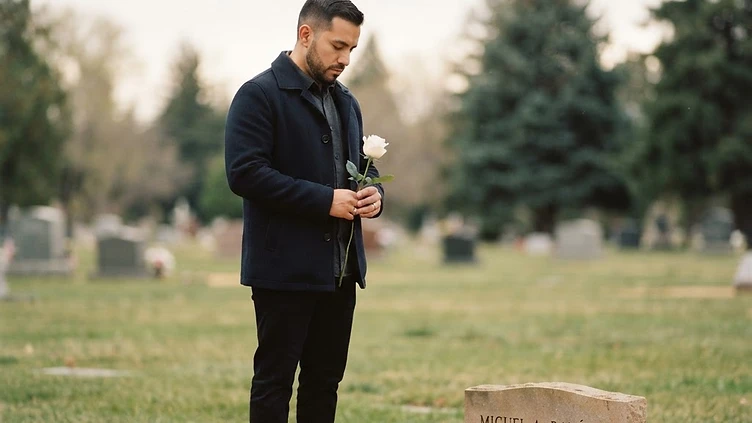
The death of a loved one is one of the most universal and most personal of human experiences. Here's a companion for the territory of grief — what to expect, how to carry it, and how to keep living alongside it.
The death of someone you love is one of the most universal human experiences and one of the most uniquely personal. Everyone who lives long enough will lose someone, and yet each loss lands as though no one could possibly understand it. Both things are true: grief is common, and grief is utterly particular. This article is a companion for the territory — not a map out of it, because there is no way out, only a way through.
## Grief is not a problem to solve
One of the first things to understand about grief is that it is not a malfunction. It is the cost of love, and it is the mind and body's way of integrating a loss that is too large to take in all at once. The confusion, the exhaustion, the fog, the sudden tears, the numbness — none of these are signs that something is wrong with you. They are signs that something real has happened, and your system is working to absorb it.
## What grief actually feels like
Grief does not stay neatly in the emotional realm. It shows up in the body — fatigue, disrupted sleep, changed appetite, aches, a lowered immune response. It shows up in the mind — forgetfulness, difficulty concentrating, a sense of unreality. It shows up in time itself — days that feel endless, weeks that vanish, moments that drop you back to the first hour of the loss without warning.
This is normal. It is also, often, alarming to the person experiencing it, because no one warned them that grief is physical and cognitive, not only emotional. Knowing that these are expected responses can reduce the secondary fear — the fear that you are breaking down — that grief often carries.
## The myth of the stages
The five stages of grief — denial, anger, bargaining, depression, acceptance — were never meant to be a script. They were observations from work with people facing terminal illness, later applied to grief, and they have been widely misunderstood as a linear checklist. Real grief does not move in a line. It loops, returns, and sometimes skips stages entirely. You may feel acceptance one day and bargaining the next. You may never feel "acceptance" in the way the word implies, and that is not a failure.
A more accurate image is that of a ball in a jar: early in grief, the ball is huge and presses against the sides constantly. Over time, the ball does not shrink, but the jar grows — your life grows around the grief, so it is touched less often. The loss never gets smaller. You get larger.
## The first weeks
In the immediate aftermath, the tasks are practical and emotional at once. There are arrangements to make, people to notify, a life to reorganize. Many grieving people describe a strange competence in this period — a fog in which they do what needs to be done — followed, weeks later, by a crash when the tasks end and the quiet begins.
If you are in the early weeks, accept help. Let others bring food, make calls, sit with you. You do not have to manage this alone, and the people who love you want to do something. Let them.
## The long middle
The long middle of grief — months and years in — is where support often thins out. The casseroles stop. The check-ins fade. The world moves on while you are still standing in the same place. This is one of the loneliest parts of grief, and it is worth knowing in advance that it is coming.
In the long middle, the work is integration: learning to live in a world that no longer contains the person, while keeping a relationship with them in some form. This is not about letting go. It is about carrying them differently — in memory, in ritual, in the way they shaped you.
## Continuing bonds
Modern grief theory has moved away from the idea that the goal is to "let go" of the person who died. Instead, many people find healing in continuing bonds — an ongoing inner relationship with the deceased that evolves over time. This might look like talking to them, writing to them, keeping certain traditions, or simply carrying their values forward. A continuing bond is not a sign of being stuck. It is a sign that love does not end at death.
## Grief that gets stuck
Most grief is intensely painful but gradually integrative. Sometimes, though, grief gets stuck — a condition sometimes called prolonged grief disorder, in which the acute symptoms persist without softening for many months or longer, and the person is unable to re-engage with life. This is not a character flaw or a failure of will. It is a specific, recognizable condition, and it responds to specialized grief therapy.
If a year has passed and the grief feels as raw and consuming as the first week, or if you cannot imagine any future, please seek a grief-informed therapist. There are interventions designed specifically for this, and they help.
## Supporting someone who is grieving
If you are reading this for someone else, the most important thing to know is that you cannot fix it, and you do not need to. What helps is presence: showing up, saying their person's name, being willing to sit in the sadness without rushing to relieve it. Avoid the platitudes — "they are in a better place," "everything happens for a reason," "at least they lived a long life." These are meant kindly but often hurt. Instead, try: "I don't know what to say, and I am here."
Keep checking in, long after the first month. The grieving person notices who is still there when the rest of the world has moved on.
## The shape of a life after loss
You will not return to the person you were before the loss. That person is gone, and mourning them — the pre-loss self — is part of the work. What emerges on the other side is someone who carries the loss as part of their story, not as the whole of it. The love and the grief live together, and over time, the life grows large enough to hold both.