
Grieving Through the Holidays
By Candor & Hope Therapy Inc.
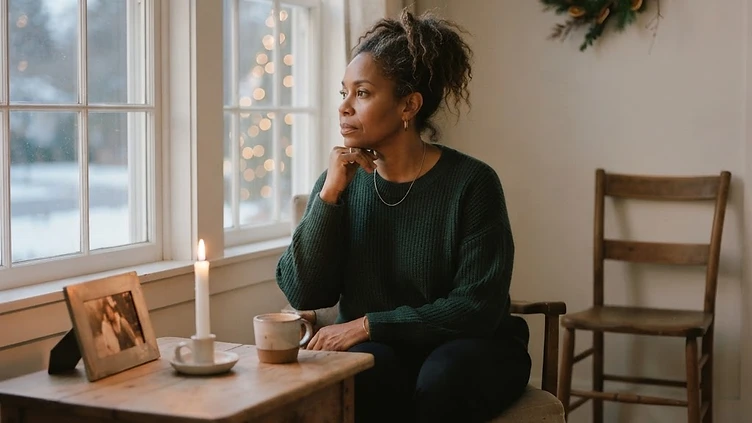
The holidays can turn grief into a season of acute absence — the empty chair, the unchanged tradition, the weight of celebration around a private loss. Here's how to navigate the festive season while grieving.
The holidays have a way of amplifying everything. Joy feels more joyful, and grief feels more heavy. For someone who has lost a loved one, the season of togetherness can become a season of acute absence — the empty chair at the table, the tradition that no longer has its center, the songs that suddenly carry a different weight. This article is for anyone entering the holidays carrying a loss, and for anyone who loves someone who is.
## Why the holidays hit harder
The holidays are saturated with memory. They come with rituals, foods, songs, and gatherings that have been repeated for years, and each one is now a vessel for the person who is gone. The first holiday without them is famously difficult, but so is the fifth, and the tenth — because the contrast between the world's celebration and your inner reality does not simply fade. It changes shape, but it does not disappear.
There is also a social dimension: the holidays are full of other people's apparent happiness, which can make your grief feel lonely and even shameful. You may feel pressure to participate, to be cheerful, to not bring down the room. That pressure, internalized, can make the grief worse — because grief that has to hide has nowhere to go.
## You are allowed to change the plan
One of the most liberating things you can do in a grief holiday is give yourself permission to change everything. You do not owe the holiday its usual form. You can:
- Skip the gathering entirely and spend the day quietly.
- Go, but leave early, with a plan for how you will exit.
- Change the menu, the location, the guest list — whatever makes the day bearable.
- Create a new ritual that includes the person who died — a candle, a toast, a place set at the table.
- Do something completely different — travel, volunteer, spend the day in nature.
There is no correct way to do the holiday while grieving. There is only the way that is kindest to you this year, knowing you can choose differently next year.
## The empty chair
The empty chair is one of the most powerful symbols of holiday grief, because it makes the absence concrete. Some families set a place at the table for the person who died; others find that too painful. Neither is wrong. What matters is that the absence is acknowledged rather than papered over. When everyone in the room knows the chair is empty, the grief can be shared instead of carried alone.
If you are hosting someone who is grieving, consider opening space for the person's name to be spoken. A simple toast, a moment of silence, or even just a sentence — "We miss [name] today" — can make the grieving person feel held rather than hidden.
## Anticipating the difficult moments
The holidays are full of predictable triggers, and predictability can be used to your advantage. Think through the day in advance: the moment of arrival, the meal, the music, the moment of departure. Identify the parts that will be hardest, and make a plan for each. This is not morbid; it is practical. Grief is easier to bear when you have a map of where it will rise.
It is also wise to plan an exit. Knowing you can leave — and how — reduces the claustrophobia that grief-in-a-crowd can create. A parked car nearby, a friend on call, a code word with a trusted person: these small structures make it possible to stay when you want to and leave when you need to.
## Anniversaries of the loss
The first anniversary of a death is often anticipated with dread — and sometimes, paradoxically, the anticipation is harder than the day itself. The body remembers the date even when the calendar approaches quietly. You may find yourself low, restless, or tearful in the days before, without immediately connecting it to the anniversary.
Anniversaries are a good time to create a ritual: visiting the grave, lighting a candle, gathering with people who loved them, doing something they loved. The ritual does not undo the loss; it gives the day a shape, which the raw anniversary often lacks.
## When others want you to "be over it"
Family dynamics during the holidays can be complicated by grief. Some relatives will be uncomfortable with your sadness and push, gently or not, for you to join the festive mood. Others may avoid the loss entirely, as though not mentioning it will protect you. Both can hurt.
If you can, tell the people closest to you what you need in advance. "I'd love to come, but I may need to step out sometimes," or "It would mean a lot if we could mention [name] at dinner." Most people want to help; they simply do not know how. Your guidance, even brief, can redirect their goodwill into something that actually reaches you.
## The second holiday, and beyond
The first holiday is hard because it is the first. The second holiday is hard in a different way — because the loss is no longer new, and there can be an expectation, from yourself and others, that you should be further along. You may be, in many ways. And the holiday may still hurt. Both can be true.
Over the years, many grieving people find that the holidays become a mix — sadness and laughter, memory and presence, grief and gratitude. The day does not return to what it was, but it grows into something that can be held. That is the work of many holidays, not one.
## When the season is too much
For some, the holidays compound a grief that is already complicated or prolonged, and the season can become genuinely destabilizing. If you find yourself unable to function, withdrawing entirely, or having thoughts of harming yourself, please reach out. The holidays are a time when support is especially available — hotlines, grief groups, therapists — and using that support is not a failure of the holiday. It is, itself, a form of care.
## Carrying them into the season
You do not have to leave your grief at the door of the holiday, and you do not have to leave the holiday at the door of your grief. The two can coexist — a day that holds both the joy of the living and the memory of the gone. That is a hard day, and it can also be a meaningful one. You get to shape it in the way that honors both your love and your loss.